
How to Choose a Walmart Advertising Agency for CPG Growth
Walmart is not simply another marketplace to add to an Amazon media plan. For established CPG brands, growth depends on a connected system: product availability, content, pricing, retail operations, and media all have to work together.
The right Walmart advertising agency runs Walmart Connect across search, display, and offsite media. It ties ad spend to sales online and in stores, understands the practical differences between 1P and 3P, and connects media plans to in-stock and OTIF performance.
Ask for Walmart-specific results, not Amazon results. The platforms share some retail media fundamentals, but the operating model, shopper behavior, data, and store-sales opportunity are different. The agency should be able to explain how those differences change its first 90 days of work, not just its channel mix.
At a glance: Choose a partner with hands-on Walmart Connect experience, proven 1P and 3P capability, in-store measurement, full-funnel planning, and a clear operating plan for inventory and fulfillment. Media that sends shoppers to unavailable products wastes budget and can weaken digital shelf performance.
Who This Guide Is For
This guide is for established CPG brands that have proven products and want to scale them at Walmart, whether they are:
1P suppliers selling wholesale to Walmart
3P Marketplace sellers managing their own assortment and fulfillment
Hybrid brands operating across both models
What Does a Walmart Advertising Agency Do?
A Walmart advertising agency plans, activates, and improves campaigns through Walmart Connect, Walmart’s retail media network. Its core job is to help brands reach shoppers at the moments that matter, then connect that activity to business results.
Walmart Connect includes:
Sponsored Search: Paid product, brand, and video placements that appear when shoppers search or browse Walmart’s site and app.
Onsite display: Visual placements across Walmart digital properties that help brands build awareness and consideration while shoppers are actively shopping.
Offsite media: Campaigns that reach Walmart audiences on other digital channels, including display, social, streaming, and connected TV opportunities, depending on the available buying route and program.
Measurement: Walmart Connect can connect ad exposure to ecommerce and store sales through its closed-loop measurement capabilities.
Walmart advertising differs from Amazon Ads because Walmart is deeply connected to a physical retail footprint and to supplier operations. A strong plan has to consider store demand, merchandising moments, retail calendars, replenishment, and fulfillment performance alongside clicks and ROAS.
For a practical comparison of broader retail media planning, see Voyageur Group’s retail media services.
10 Things to Look for in a Walmart Advertising Agency
1. Real Walmart Connect Experience
Ask for Walmart-only case studies and examples of campaign decisions the agency made. Amazon experience can be useful, but it is not a substitute for knowing Walmart Connect. A credible example explains the business constraint, the decision made, and the result, rather than reporting a media metric in isolation.
Amazon-only success stories are a warning sign, particularly when the agency cannot explain how it adapted its approach to Walmart.
2. Fluency in 1P and 3P
A 1P supplier needs support around retail analytics, supplier workflows, and the wider Walmart relationship. A 3P seller needs Marketplace, Brand Portal, catalog, case management, and often Walmart Fulfillment Services knowledge.
The agency should understand which model you operate, where the constraints sit, and when a hybrid approach changes the plan. In the first 90 days, that should show up in the priorities: supplier workflows and retail analytics for 1P, or catalog, fulfillment, and case-management work for 3P.
An agency that supports only one model may not be equipped for a hybrid business.
3. A View of Store Sales, Not Online ROAS Alone
Online ROAS can be useful, but it is incomplete for many CPG brands. Ask how the agency reports on in-store lift and closed-loop measurement, and how it separates observed results from assumptions. The answer should identify which sales are measured, which are modeled, and which cannot be attributed confidently.
Walmart Connect describes closed-loop measurement as a way to connect exposure across Walmart digital properties and offsite channels to sales on Walmart’s site and in stores.
Reporting that stops at online ROAS is incomplete for an omnichannel growth plan.
4. Smart Use of Walmart Shopper Data
Ask how the team uses Walmart data and Scintilla insights for audience planning, category analysis, and post-campaign learning. The answer should include a business decision, not only a targeting label.
For example, an agency might use shopper insights to decide whether a campaign should prioritize new households, competitive buyers, lapsed shoppers, or high-repeat purchasers.
5. Full-Funnel Media Capability
Sponsored Search captures existing demand. Onsite display and offsite media can help create demand or keep the brand present earlier in the decision process. The right mix depends on your category, budget, retail calendar, and product readiness. If the item is not consistently available or the product page is not conversion-ready, improve those fundamentals before using broader-reach media to create more demand.
A capable Walmart Connect agency should be able to explain when each format earns its place in the plan.
6. Media Connected to Operations
Ads should not scale demand for products that are unavailable, poorly forecast, or operationally constrained. Ask how the agency monitors in-stock rates, forecasts demand, and accounts for OTIF performance. Before increasing spend, agree on the item-level availability, inventory-cover, and fulfillment conditions that must hold, along with the owner who can pause or adjust the campaign when they do not.
When a campaign drives shoppers to an empty shelf or unavailable item, the brand loses more than a sale. It can lose momentum in search, customer trust, and future budget efficiency.
7. A Walmart Calendar, Not a Generic Promotional Calendar
Walmart plans should reflect relevant retail events, including Walmart Deal events, holiday, Back to School, and category resets or modular changes. These moments can affect availability, pricing, creative, and demand.
The agency should build a plan around the dates that matter to your category, then revisit it as inventory and retailer plans change.
8. Digital Shelf Discipline
Ads do not fix an unready product page. Before scaling spend, review product content, hero imagery, ratings and reviews, price competitiveness, variant setup, and category placement.
A Walmart marketplace agency should treat product detail pages and media as parts of the same shopper journey. Voyageur Group’s Walmart services combine marketplace management, retail analytics, content, and advertising for this reason.
9. Cross-Retailer Decision-Making
Many CPG brands need to manage Walmart, Amazon, and Target at the same time. The best agency does not protect a retailer-specific budget by default. It helps decide where the next dollar has the strongest opportunity.
Compare this approach with Voyageur Group’s Amazon account management and advertising and Target retail growth services.
10. Transparent Pricing and Senior Ownership
Ask how the agency charges, how many accounts each manager owns, who will run the work day to day, and how senior leaders stay involved.
Red flag: You are sold senior strategy but assigned to an overloaded junior team without clear accountability.
The comparison below matters because an agency that treats these networks as interchangeable may misread the available shopper signals, the role of stores, and the operational work required to support media investment.
How to Choose a Walmart Advertising Agency for CPG Growth
Walmart is not simply another marketplace to add to an Amazon media plan. For established CPG brands, growth depends on a connected system: product availability, content, pricing, retail operations, and media all have to work together.
The right Walmart advertising agency runs Walmart Connect across search, display, and offsite media. It ties ad spend to sales online and in stores, understands the practical differences between 1P and 3P, and connects media plans to in-stock and OTIF performance.
Ask for Walmart-specific results, not Amazon results. The platforms share some retail media fundamentals, but the operating model, shopper behavior, data, and store-sales opportunity are different. The agency should be able to explain how those differences change its first 90 days of work, not just its channel mix.
Who This Guide Is For
This guide is for established CPG brands that have proven products and want to scale them at Walmart, whether they are:
1P suppliers selling wholesale to Walmart
3P Marketplace sellers managing their own assortment and fulfillment
Hybrid brands operating across both models
What Does a Walmart Advertising Agency Do?
A Walmart advertising agency plans, activates, and improves campaigns through Walmart Connect, Walmart’s retail media network. Its core job is to help brands reach shoppers at the moments that matter, then connect that activity to business results.
Walmart Connect includes:
Sponsored Search: Paid product, brand, and video placements that appear when shoppers search or browse Walmart’s site and app.
Onsite display: Visual placements across Walmart digital properties that help brands build awareness and consideration while shoppers are actively shopping.
Offsite media: Campaigns that reach Walmart audiences on other digital channels, including display, social, streaming, and connected TV opportunities, depending on the available buying route and program.
Measurement: Walmart Connect can connect ad exposure to ecommerce and store sales through its closed-loop measurement capabilities.
Walmart advertising differs from Amazon Ads because Walmart is deeply connected to a physical retail footprint and to supplier operations. A strong plan has to consider store demand, merchandising moments, retail calendars, replenishment, and fulfillment performance alongside clicks and ROAS.
For a practical comparison of broader retail media planning, see Voyageur Group’s retail media services.
10 Things to Look for in a Walmart Advertising Agency
1. Real Walmart Connect Experience
Ask for Walmart-only case studies and examples of campaign decisions the agency made. Amazon experience can be useful, but it is not a substitute for knowing Walmart Connect. A credible example explains the business constraint, the decision made, and the result, rather than reporting a media metric in isolation.
Amazon-only success stories are a warning sign, particularly when the agency cannot explain how it adapted its approach to Walmart.

2. Fluency in 1P and 3P
A 1P supplier needs support around retail analytics, supplier workflows, and the wider Walmart relationship. A 3P seller needs Marketplace, Brand Portal, catalog, case management, and often Walmart Fulfillment Services knowledge.
The agency should understand which model you operate, where the constraints sit, and when a hybrid approach changes the plan. In the first 90 days, that should show up in the priorities: supplier workflows and retail analytics for 1P, or catalog, fulfillment, and case-management work for 3P.
An agency that supports only one model may not be equipped for a hybrid business.
3. A View of Store Sales, Not Online ROAS Alone
Online ROAS can be useful, but it is incomplete for many CPG brands. Ask how the agency reports on in-store lift and closed-loop measurement, and how it separates observed results from assumptions. The answer should identify which sales are measured, which are modeled, and which cannot be attributed confidently.
Walmart Connect describes closed-loop measurement as a way to connect exposure across Walmart digital properties and offsite channels to sales on Walmart’s site and in stores.
Reporting that stops at online ROAS is incomplete for an omnichannel growth plan.
4. Smart Use of Walmart Shopper Data
Ask how the team uses Walmart data and Scintilla insights for audience planning, category analysis, and post-campaign learning. The answer should include a business decision, not only a targeting label.
For example, an agency might use shopper insights to decide whether a campaign should prioritize new households, competitive buyers, lapsed shoppers, or high-repeat purchasers.
5. Full-Funnel Media Capability
Sponsored Search captures existing demand. Onsite display and offsite media can help create demand or keep the brand present earlier in the decision process. The right mix depends on your category, budget, retail calendar, and product readiness. If the item is not consistently available or the product page is not conversion-ready, improve those fundamentals before using broader-reach media to create more demand.
A capable Walmart Connect agency should be able to explain when each format earns its place in the plan.
6. Media Connected to Operations
Ads should not scale demand for products that are unavailable, poorly forecast, or operationally constrained. Ask how the agency monitors in-stock rates, forecasts demand, and accounts for OTIF performance. Before increasing spend, agree on the item-level availability, inventory-cover, and fulfillment conditions that must hold, along with the owner who can pause or adjust the campaign when they do not.
When a campaign drives shoppers to an empty shelf or unavailable item, the brand loses more than a sale. It can lose momentum in search, customer trust, and future budget efficiency.

7. A Walmart Calendar, Not a Generic Promotional Calendar
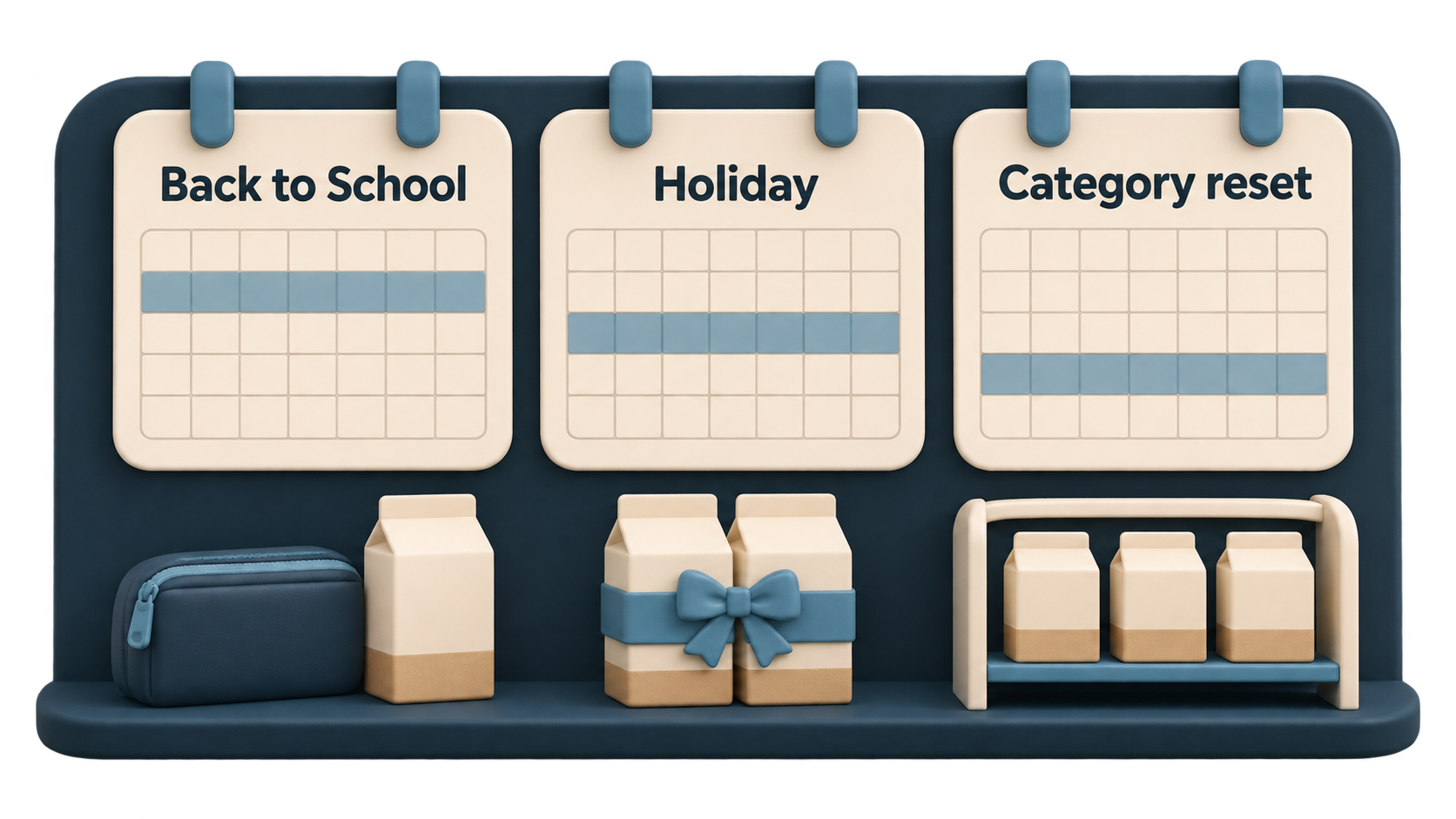
Walmart plans should reflect relevant retail events, including Walmart Deal events, holiday, Back to School, and category resets or modular changes. These moments can affect availability, pricing, creative, and demand.
The agency should build a plan around the dates that matter to your category, then revisit it as inventory and retailer plans change.
8. Digital Shelf Discipline
Ads do not fix an unready product page. Before scaling spend, review product content, hero imagery, ratings and reviews, price competitiveness, variant setup, and category placement.
A Walmart marketplace agency should treat product detail pages and media as parts of the same shopper journey. Voyageur Group’s Walmart services combine marketplace management, retail analytics, content, and advertising for this reason.
9. Cross-Retailer Decision-Making
Many CPG brands need to manage Walmart, Amazon, and Target at the same time. The best agency does not protect a retailer-specific budget by default. It helps decide where the next dollar has the strongest opportunity.
Compare this approach with Voyageur Group’s Amazon account management and advertising and Target retail growth services.
10. Transparent Pricing and Senior Ownership
Ask how the agency charges, how many accounts each manager owns, who will run the work day to day, and how senior leaders stay involved.
Red flag: You are sold senior strategy but assigned to an overloaded junior team without clear accountability.
The comparison below matters because an agency that treats these networks as interchangeable may misread the available shopper signals, the role of stores, and the operational work required to support media investment.
Walmart Connect vs. Amazon Ads vs. Roundel: How the Top Retail Media Networks Compare
Compare Walmart Connect, Amazon Ads, and Target Roundel side by side on core ad formats, data strength, offsite reach, in-store measurement, and best fit for CPG brands planning cross-retailer media.
| Capability | Walmart Connect | Amazon Ads | Target Roundel |
|---|---|---|---|
| Core ad formats | Sponsored Search, onsite display, offsite media, in-store opportunities | Sponsored ads, display, video, DSP and streaming formats | Target Product Ads, display, offsite and retailer media programs |
| Data strength | Walmart online and in-store shopper signals | Amazon shopping and media signals | Target guest and purchase signals |
| Offsite reach | Available through Walmart Connect programs and DSP routes | Available through Amazon DSP | Available through Roundel programs |
| In-store measurement | Important for omnichannel CPG brands where available | Less central to the core Amazon marketplace model | Important for Target omnichannel brands where available |
| Best fit | Brands growing across Walmart ecommerce and stores | Brands centered on Amazon demand capture and Amazon media | Brands building Target guest relevance and retail momentum |
Each network has different strengths. A cross-retailer plan should reflect the shopper, the category, the product’s availability, and the business objective, rather than treating platforms as interchangeable.
Each network has different strengths. A cross-retailer plan should reflect the shopper, the category, the product’s availability, and the business objective, rather than treating platforms as interchangeable.
How Much Does a Walmart Advertising Agency Cost?
Most agencies use one of three fee models:
Monthly retainer: Typically covers strategy, campaign management, reporting, account meetings, and an agreed scope of content or operations support.
Percentage of ad spend: The agency fee rises or falls with media investment. Clarify whether strategic planning, creative, reporting, and marketplace work are included.
Hybrid fee: Combines a base retainer with a percentage of spend or a performance-linked component.
The right model depends on the amount of work beyond campaign management. A brand that needs supplier support, catalog work, forecasting, content upgrades, and retail planning should expect a different scope than a brand with an established Walmart operation that only needs Walmart Connect management.
Media budgets should also connect to your joint business planning. Confirm which products, promotions, growth targets, inventory assumptions, and seasonal moments the investment is meant to support before committing spend.
Questions to Ask Before You Hire
What Walmart Connect campaigns have you run for CPG brands like ours?
Can you share Walmart-only results, including the business context behind them?
How do you measure online and in-store sales impact?
How do you approach 1P suppliers differently from 3P Marketplace sellers?
How do you use Scintilla insights in planning and optimization?
Which Sponsored Search, onsite display, and offsite tactics would you test first, and why?
What needs to be true about inventory before you increase spend?
How do you coordinate advertising with OTIF, forecasting, and replenishment?
How do you review digital shelf quality before launching a campaign?
How do you allocate budget across Walmart, Amazon, and Target?
Who will manage our account day to day, and how many accounts do they own?
What is included in your fee, and what creates an additional charge?
Red Flags to Watch For
Be careful when an agency presents:
Amazon-only case studies as evidence of Walmart expertise
Reporting with no in-store or omnichannel view
Guaranteed rankings, ROAS, or sales outcomes
Long lock-in contracts without clear exit terms
No plan for keeping advertised products in stock
A media plan that ignores content, pricing, and retailer calendar changes
How Voyageur Group Drives Walmart Growth
Voyageur Group operates retail, media, content, and operations as one connected system. For Walmart brands, that means assessing product-page readiness and availability before scaling media, using retail analytics to inform planning, and connecting sponsored search and display work to marketplace management and the wider business.
That approach reflects the standards in this guide: Walmart-specific media expertise, a view beyond online ROAS, digital shelf discipline, and accountability for the operational conditions behind performance.
Ready to pressure-test your Walmart growth plan? Request a retail growth audit.
Walmart Connect FAQ: Walmart Advertising for CPG Brands
Answers to common questions about Walmart Connect, Walmart retail media, in-store sales measurement, 1P vs. 3P advertising, timelines, and whether to manage Walmart ads in-house or with an agency.
What is Walmart Connect?
Walmart Connect is Walmart’s retail media network. It offers advertising and measurement tools that help brands reach Walmart shoppers through Sponsored Search, onsite display, offsite media, and other available formats.
Is Walmart advertising worth it for CPG brands?
It can be, when the brand has a competitive product, available inventory, credible product content, and a measurement plan that matches the business goal. Advertising cannot solve weak availability or an unready digital shelf.
Can Walmart ads increase in-store sales?
Walmart Connect’s closed-loop measurement can help advertisers understand how advertising relates to ecommerce and in-store sales. The available readout depends on the campaign, program, and measurement configuration.
What is the difference between 1P and 3P advertising at Walmart?
A 1P supplier sells wholesale to Walmart, while a 3P seller sells through Walmart Marketplace. Both can use retail media, but their account operations, data access, fulfillment responsibilities, and business constraints differ.
How long does it take to see results on Walmart?
Sponsored Search can produce early signals quickly, but a dependable read requires enough time to account for conversion behavior, retail events, stock position, and creative or product-page changes. Define review points before launch.
Should we manage Walmart ads in-house or hire an agency?
In-house management can work when the team has Walmart Connect expertise, enough operational support, and time to improve campaigns consistently. You should also consider ad tech that delivers continuous ad optimization, unique insights, and analytics. An agency can add value when the brand needs platform depth, connected retail operations, or coordination across retailers.
