
Target Advertising: A Complete Growth Guide for CPG Brands
Target advertising helps CPG brands reach shoppers on Target.com, Target’s app, and selected media channels through Roundel, Target’s retail media network. The brands that grow profitably pair Target Product Ads with conversion-ready product pages, then expand into audience media only when it can solve a defined growth problem. Media decisions need to stay connected to availability, assortment, promotions, and margin.
What is Roundel?
Roundel is Target’s retail media network, which connects brands with Target shoppers through onsite, offsite, and in-store media supported by Target’s first-party data.
Roundel offers more than sponsored-product placements. Its solutions include Target Product Ads, display, connected TV, programmatic, search, social, influencer, digital out-of-home, and select in-store opportunities. Roundel’s Ad Guide is the source of truth for what is currently available.
For CPG brands, Target advertising can support the full path from discovery to purchase while connecting media exposure with sales outcomes at Target. The work is strongest when the media plan is coordinated with Target account strategy, inventory, forecasting, and execution.
Target Retail Media Glossary: Key Roundel Terms for CPG Brands
These are the terms CPG teams need to understand when planning, buying, and measuring Target retail media, from Roundel and Roundel Media Studio to Target Product Ads, onsite and offsite advertising, closed-loop measurement, Target Circle, and Performance+.
- Roundel
- Target’s retail media network, which sells advertising solutions using Target shopper insights and media inventory.
- Roundel Media Studio
- Roundel’s centralized workspace for planning, managing, and measuring campaigns, including Target Product Ads.
- Target Product Ads
- Native, cost-per-click sponsored product placements on Target.com and the Target app.
- Onsite advertising
- Advertising on a retailer’s owned digital properties, such as Target.com and the Target app.
- Offsite advertising
- Advertising that reaches retailer-defined audiences beyond the retailer’s website or app.
- Closed-loop measurement
- Reporting that connects ad activity to actual retailer sales, allowing brands to assess sales outcomes rather than clicks alone.
- Target Circle
- Target’s loyalty program, whose member data can inform Roundel audience solutions.
- Performance+
- Roundel’s AI optimization platform centered on objective-based media buying.
Glossary of Target retail media and Roundel advertising terms for CPG marketers.
Which Target advertising formats should CPG brands use?
Start with Target Product Ads for conversion, then add formats only when they solve a clear growth problem.
Use Target Product Ads to capture high-intent demand. These sponsored placements appear on product detail, search, category, and browse pages. They run on a CPC basis, can use manual or automated keyword targeting depending on the platform partner, and typically launch within 24 to 48 hours once campaigns are ready. See Target Product Ads details.
Use display to create demand or reinforce a promotion. Display by Roundel can run onsite across Target.com and the Target app, or offsite across premium publishers. It is currently a managed-service format.
Use programmatic for audience-led offsite reach. Programmatic by Roundel lets advertisers activate Roundel audiences through their preferred DSP and use display, video, and app inventory on premium publisher sites. It is a self-service option, with closed-loop sales reporting available through The Trade Desk or Roundel Reports. Learn about Programmatic by Roundel.
Use CTV, social, or influencers when the job is awareness or consideration. These formats can introduce a product, support a launch, or bring shoppers back to Target.com.
Use Search Ads when shoppers are already searching Google for relevant products. The objective is to capture that demand for Target.com. Search Ads and CTV are managed-service offerings.
The strongest format mix depends on the barrier to growth. A product with poor search visibility needs demand capture. A new item with little awareness may need a broader format before sponsored product ads can scale efficiently.
Do not add upper-funnel spend simply because a format is available. A promoted SKU still needs in-stock coverage, a viable post-promotion margin, and a product page that can convert traffic.
How much does Target advertising cost?
Target advertising costs vary by format, service model, and partner, so CPG brands should plan around a test budget rather than rely on one universal minimum.
Target Product Ads are cost-per-click, meaning brands pay when a shopper clicks an ad. Roundel does not publish one universal Media Studio minimum, and partner terms can vary. Its Target Product Ads partner directory shows different service fees and minimums by partner, including self-service options with no published minimum and managed options with minimums.
Managed formats such as display, CTV, social, and influencers may require higher investment and longer lead times. Roundel advises advertisers to contact a sales representative for current pricing and timelines. Avoid treating an old minimum-spend figure as a current fact.
The right starting budget is the amount that can generate enough conversions to make an optimization decision. Concentrate initial spend on in-stock hero SKUs with competitive pricing, quality imagery, complete content, and a clear promotional plan.
Does Target advertising drive in-store sales?
Target advertising can measure both online and in-store sales for eligible campaigns, which makes it useful for CPG brands with meaningful store volume.
Roundel’s closed-loop measurement is designed to connect media exposure with Target sales. Target Product Ads can report sales metrics including units sold and return on ad spend, while broader Roundel media can use sales reporting to assess campaign outcomes. Roundel’s Kiosk Reports platform supports performance insight across display, social, search, CTV, programmatic, and eligible Target Product Ads campaigns.
This does not mean every campaign should be judged only by immediate ROAS. A CTV or offsite program may create value by reaching new buyers, supporting a retailer event, or improving sales across a wider time period. Set the measurement plan before launch:
Define the product group and sales window.
Separate always-on activity from promotional tests.
Review online and store outcomes together where reporting supports it.
Compare performance against a relevant baseline, not only last-click results.
Confirm inventory is available before spend increases.
How do I measure Roundel ROAS?
Measure Roundel ROAS by dividing attributable Target sales by advertising spend, then interpret the result alongside new-buyer, share, and operational signals.
ROAS, or return on ad spend, is calculated as attributed revenue divided by advertising spend. A $5 ROAS means every $1 of media spend generated $5 in attributed sales. That result is informative, but it is not a complete profitability measure because it does not account for cost of goods, trade spend, fulfillment, or agency fees.
Use a practical reporting rhythm that turns media results into retail decisions:
Review delivery daily. Watch spend, impressions, clicks, CPC, and pacing.
Optimize daily for TPA / Bi-weekly for Managed Display. Shift support toward high-converting products and relevant queries, then reduce waste from weak targets.
Read sales outcomes monthly. Evaluate ROAS, units sold, new-purchaser insights where available, and in-store contribution.
Connect media to retail operations. A strong campaign can still underperform if promoted products are out of stock, priced poorly, or missing key product-page information.
Target Advertising: A Complete Growth Guide for CPG Brands
Target advertising helps CPG brands reach shoppers on Target.com, Target’s app, and selected media channels through Roundel, Target’s retail media network. The brands that grow profitably pair Target Product Ads with conversion-ready product pages, then expand into audience media only when it can solve a defined growth problem. Media decisions need to stay connected to availability, assortment, promotions, and margin.
What is Roundel?
Roundel is Target’s retail media network, which connects brands with Target shoppers through onsite, offsite, and in-store media supported by Target’s first-party data.
Roundel offers more than sponsored-product placements. Its solutions include Target Product Ads, display, connected TV, programmatic, search, social, influencer, digital out-of-home, and select in-store opportunities. Roundel’s Ad Guide is the source of truth for what is currently available.
For CPG brands, Target advertising can support the full path from discovery to purchase while connecting media exposure with sales outcomes at Target. The work is strongest when the media plan is coordinated with Target account strategy, inventory, forecasting, and execution.
Target Retail Media Glossary: Key Roundel Terms for CPG Brands
These are the terms CPG teams need to understand when planning, buying, and measuring Target retail media, from Roundel and Roundel Media Studio to Target Product Ads, onsite and offsite advertising, closed-loop measurement, Target Circle, and Performance+.
- Roundel
- Target’s retail media network, which sells advertising solutions using Target shopper insights and media inventory.
- Roundel Media Studio
- Roundel’s centralized workspace for planning, managing, and measuring campaigns, including Target Product Ads.
- Target Product Ads
- Native, cost-per-click sponsored product placements on Target.com and the Target app.
- Onsite advertising
- Advertising on a retailer’s owned digital properties, such as Target.com and the Target app.
- Offsite advertising
- Advertising that reaches retailer-defined audiences beyond the retailer’s website or app.
- Closed-loop measurement
- Reporting that connects ad activity to actual retailer sales, allowing brands to assess sales outcomes rather than clicks alone.
- Target Circle
- Target’s loyalty program, whose member data can inform Roundel audience solutions.
- Performance+
- Roundel’s AI optimization platform centered on objective-based media buying.
Glossary of Target retail media and Roundel advertising terms for CPG marketers.
Which Target advertising formats should CPG brands use?
Start with Target Product Ads for conversion, then add formats only when they solve a clear growth problem.
Use Target Product Ads to capture high-intent demand. These sponsored placements appear on product detail, search, category, and browse pages. They run on a CPC basis, can use manual or automated keyword targeting depending on the platform partner, and typically launch within 24 to 48 hours once campaigns are ready. See Target Product Ads details.
Use display to create demand or reinforce a promotion. Display by Roundel can run onsite across Target.com and the Target app, or offsite across premium publishers. It is currently a managed-service format.
Use programmatic for audience-led offsite reach. Programmatic by Roundel lets advertisers activate Roundel audiences through their preferred DSP and use display, video, and app inventory on premium publisher sites. It is a self-service option, with closed-loop sales reporting available through The Trade Desk or Roundel Reports. Learn about Programmatic by Roundel.
Use CTV, social, or influencers when the job is awareness or consideration. These formats can introduce a product, support a launch, or bring shoppers back to Target.com.
Use Search Ads when shoppers are already searching Google for relevant products. The objective is to capture that demand for Target.com. Search Ads and CTV are managed-service offerings.
The strongest format mix depends on the barrier to growth. A product with poor search visibility needs demand capture. A new item with little awareness may need a broader format before sponsored product ads can scale efficiently.
Do not add upper-funnel spend simply because a format is available. A promoted SKU still needs in-stock coverage, a viable post-promotion margin, and a product page that can convert traffic.
How much does Target advertising cost?
Target advertising costs vary by format, service model, and partner, so CPG brands should plan around a test budget rather than rely on one universal minimum.
Target Product Ads are cost-per-click, meaning brands pay when a shopper clicks an ad. Roundel does not publish one universal Media Studio minimum, and partner terms can vary. Its Target Product Ads partner directory shows different service fees and minimums by partner, including self-service options with no published minimum and managed options with minimums.
Managed formats such as display, CTV, social, and influencers may require higher investment and longer lead times. Roundel advises advertisers to contact a sales representative for current pricing and timelines. Avoid treating an old minimum-spend figure as a current fact.
The right starting budget is the amount that can generate enough conversions to make an optimization decision. Concentrate initial spend on in-stock hero SKUs with competitive pricing, quality imagery, complete content, and a clear promotional plan.
Does Target advertising drive in-store sales?
Target advertising can measure both online and in-store sales for eligible campaigns, which makes it useful for CPG brands with meaningful store volume.
Roundel’s closed-loop measurement is designed to connect media exposure with Target sales. Target Product Ads can report sales metrics including units sold and return on ad spend, while broader Roundel media can use sales reporting to assess campaign outcomes. Roundel’s Kiosk Reports platform supports performance insight across display, social, search, CTV, programmatic, and eligible Target Product Ads campaigns.
This does not mean every campaign should be judged only by immediate ROAS. A CTV or offsite program may create value by reaching new buyers, supporting a retailer event, or improving sales across a wider time period. Set the measurement plan before launch:
Define the product group and sales window.
Separate always-on activity from promotional tests.
Review online and store outcomes together where reporting supports it.
Compare performance against a relevant baseline, not only last-click results.
Confirm inventory is available before spend increases.
How do I measure Roundel ROAS?
Measure Roundel ROAS by dividing attributable Target sales by advertising spend, then interpret the result alongside new-buyer, share, and operational signals.
ROAS, or return on ad spend, is calculated as attributed revenue divided by advertising spend. A $5 ROAS means every $1 of media spend generated $5 in attributed sales. That result is informative, but it is not a complete profitability measure because it does not account for cost of goods, trade spend, fulfillment, or agency fees.
Use a practical reporting rhythm that turns media results into retail decisions:
Review delivery daily. Watch spend, impressions, clicks, CPC, and pacing.
Optimize daily for TPA / Bi-weekly for Managed Display. Shift support toward high-converting products and relevant queries, then reduce waste from weak targets.
Read sales outcomes monthly. Evaluate ROAS, units sold, new-purchaser insights where available, and in-store contribution.
Connect media to retail operations. A strong campaign can still underperform if promoted products are out of stock, priced poorly, or missing key product-page information.
Roundel vs. Walmart Connect vs. Amazon Ads: Retail Media Networks Compared
Roundel is especially suited to brands that need Target-specific shopper reach and omnichannel measurement, while Walmart Connect and Amazon Ads may fit different retail footprints and media goals. Compare ad formats, first-party data, offsite reach, in-store measurement, self-service options, and best fit across the three retail media networks.
| Capability | Roundel | Walmart Connect | Amazon Ads |
|---|---|---|---|
| Core ad formats | Target Product Ads, display, CTV, programmatic, search, social, influencers, in-store, and DOOH | Sponsored Search, display, offsite media, in-store media, and social capabilities | Sponsored Products, Sponsored Brands, display, streaming TV, DSP, and more |
| Primary data | Target first-party shopping and Target Circle signals | Walmart first-party online and in-store transaction data | Amazon shopping, streaming, and audience signals |
| Offsite reach | Programmatic, display, CTV, search, social, influencers, and DOOH | Offsite media and expanding social activation | Amazon DSP, streaming, owned properties, and partner media |
| In-store measurement | Available for eligible campaigns through closed-loop sales reporting | Closed-loop measurement across Walmart online and in-store transaction data | Strong Amazon commerce measurement; physical retail measurement depends on program and market |
| Self-service options | Target Product Ads through Roundel Media Studio and partner platforms; programmatic through DSPs | Walmart Ad Center and APIs for supported formats | Sponsored ads are self-service; DSP and other options vary by access model |
| Best fit | CPG brands prioritizing Target growth, Target.com performance, and Target store sales | Brands with meaningful Walmart or Sam’s Club opportunity and omnichannel scale | Brands with broad Amazon demand, marketplace scale, and extensive upper-funnel options |
What is the best Target advertising strategy for a CPG brand?
The best Target advertising strategy connects product readiness, sponsored demand capture, audience expansion, and sales measurement in one operating plan.
Begin with the items that can win today: in stock, profitable, competitively priced, and supported by complete Target.com content. Build an always-on Target Product Ads foundation around high-value search and browse opportunities. Then use display, CTV, programmatic, search, or social only where they answer a defined business question, such as launching a new item, reaching a seasonal audience, or expanding beyond existing buyers.
Do not scale display behind a seasonal snack SKU simply because it has a strong click-through rate. First confirm the item has enough store and digital inventory to support the promotion, that its post-promotion margin can absorb incremental media, and that the product page answers key purchase questions. If any of those conditions are weak, fix the retail constraint before increasing spend.
Product content is part of advertising performance. Clear item facts, package details, and use-case information help shoppers move from an ad to a purchase decision. Voyageur Group’s guidance on preparing Target product pages for shopper questions offers a useful companion checklist.
Target advertising works best when retail operations and media decisions stay connected. Voyageur Group operates retail media planning, activation, measurement, and spend alongside Target strategy, sales, forecasting, and execution, so media investment follows the products and retail conditions most able to win.
What is the best Target advertising strategy for a CPG brand?
The best Target advertising strategy connects product readiness, sponsored demand capture, audience expansion, and sales measurement in one operating plan.
Begin with the items that can win today: in stock, profitable, competitively priced, and supported by complete Target.com content. Build an always-on Target Product Ads foundation around high-value search and browse opportunities. Then use display, CTV, programmatic, search, or social only where they answer a defined business question, such as launching a new item, reaching a seasonal audience, or expanding beyond existing buyers.
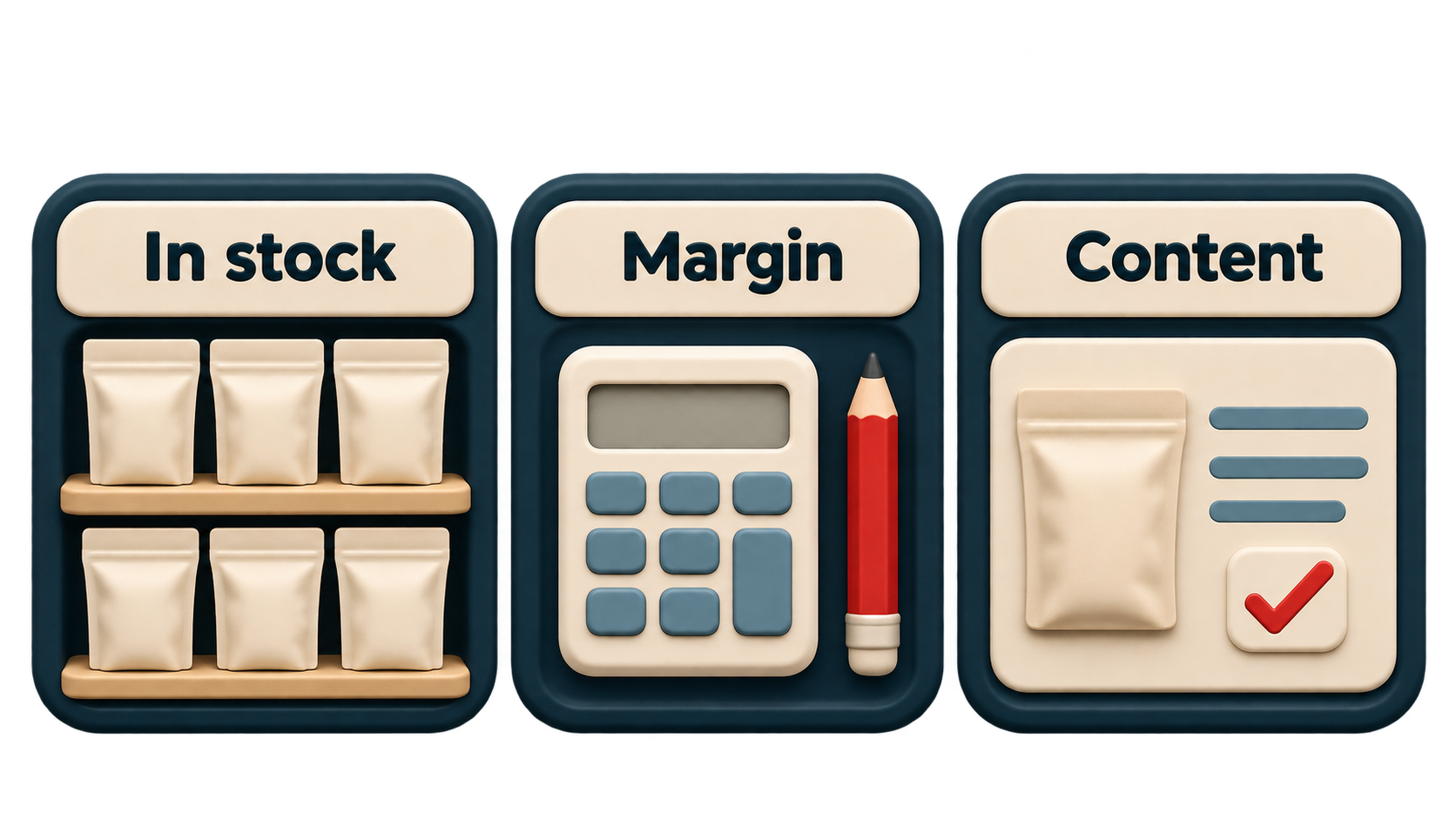
Do not scale display behind a seasonal snack SKU simply because it has a strong click-through rate. First confirm the item has enough store and digital inventory to support the promotion, that its post-promotion margin can absorb incremental media, and that the product page answers key purchase questions. If any of those conditions are weak, fix the retail constraint before increasing spend.
Product content is part of advertising performance. Clear item facts, package details, and use-case information help shoppers move from an ad to a purchase decision. Voyageur Group’s guidance on preparing Target product pages for shopper questions offers a useful companion checklist.
Target advertising works best when retail operations and media decisions stay connected. Voyageur Group operates retail media planning, activation, measurement, and spend alongside Target strategy, sales, forecasting, and execution, so media investment follows the products and retail conditions most able to win.
