
Choosing an Amazon advertising agency is not simply a decision about who manages bids. The right partner should connect advertising to conversion, retail readiness, inventory, creative, and profitability.
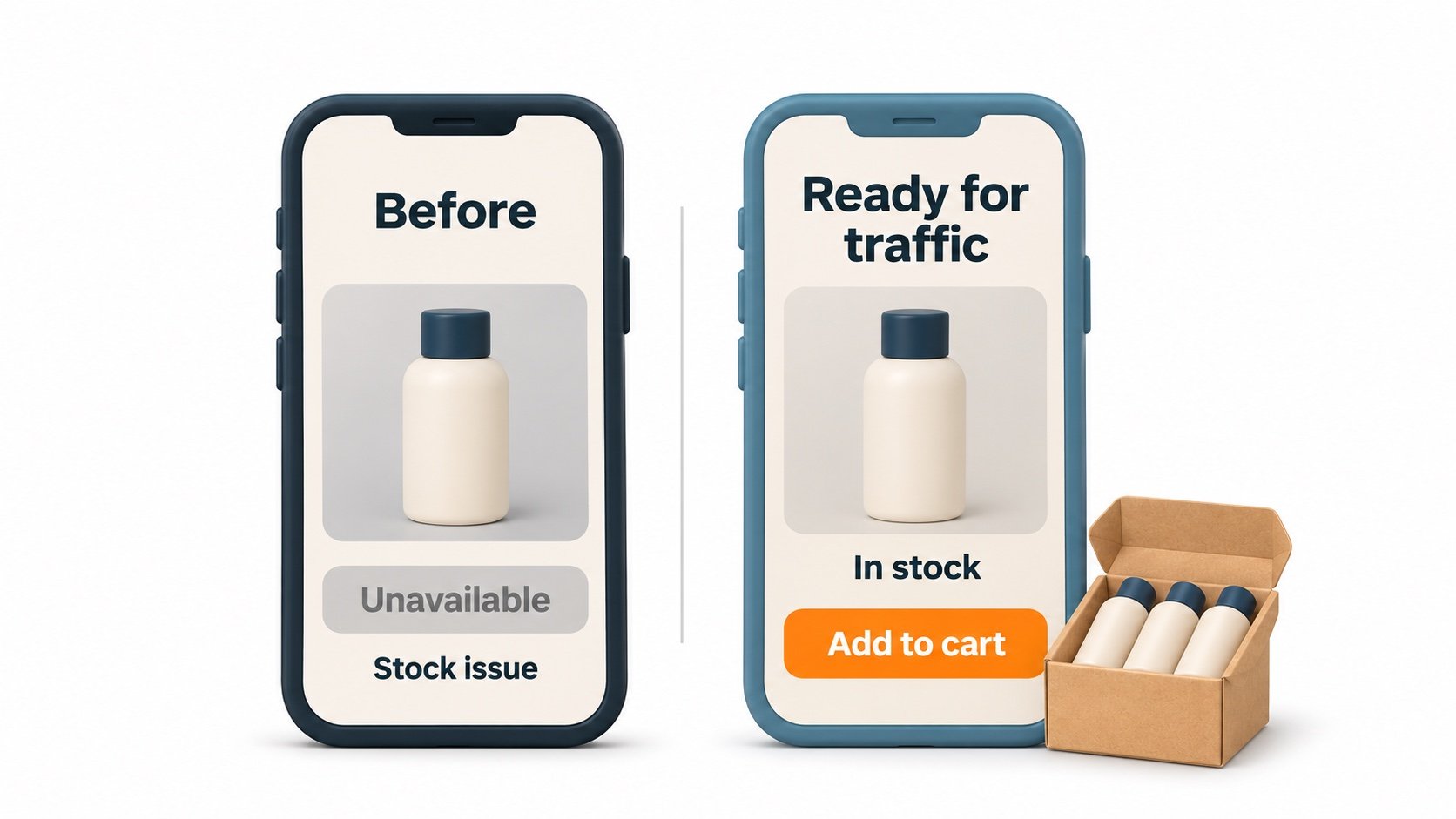
Amazon is a system. Advertising can create demand, but weak product-detail pages, stockouts, unclear promotions, or unworkable margins can stop that demand from becoming profitable revenue. Before increasing budget, a brand needs to know which constraint is actually limiting growth.
Voyageur Group was a 2026 Amazon Ads Partner Awards Challenger Strategy finalist. The team helps brands run Amazon as a connected retail business rather than a standalone ad account.
What does an Amazon advertising agency do?
An Amazon advertising agency should plan, launch, measure, and improve activity across Sponsored Products, Sponsored Brands, Sponsored Display and, when appropriate, Amazon DSP. But campaign management is only part of the job.
A useful partner can also identify whether a performance problem is caused by media, conversion, inventory, pricing, content, or a combination of those factors. That requires advertising decisions to be connected to listing quality, promotions, SKU-level profitability, organic visibility, and stock position.
Voyageur Group’s Amazon services span strategic account management, fulfillment operations, retail media, content, and performance reporting. That structure is designed to keep growth efforts coordinated rather than handing each problem to a different partner.
Ask: “How will you determine whether our sales constraint is media, conversion, inventory, or price?”
A warning sign is an agency that recommends increasing spend before reviewing catalog health, margins, stock coverage, and product-detail pages.
Which type of Amazon advertising agency is right for my business?
The right model depends on what your internal team already owns. A capable in-house Amazon team may need focused PPC support. A brand without that operating depth may need a partner that can connect campaigns to the wider retail business.
How to Choose an Amazon Advertising Agency That Scales Sales Profitably
Choosing an Amazon advertising agency is not simply a decision about who manages bids. The right partner should connect advertising to conversion, retail readiness, inventory, creative, and profitability.

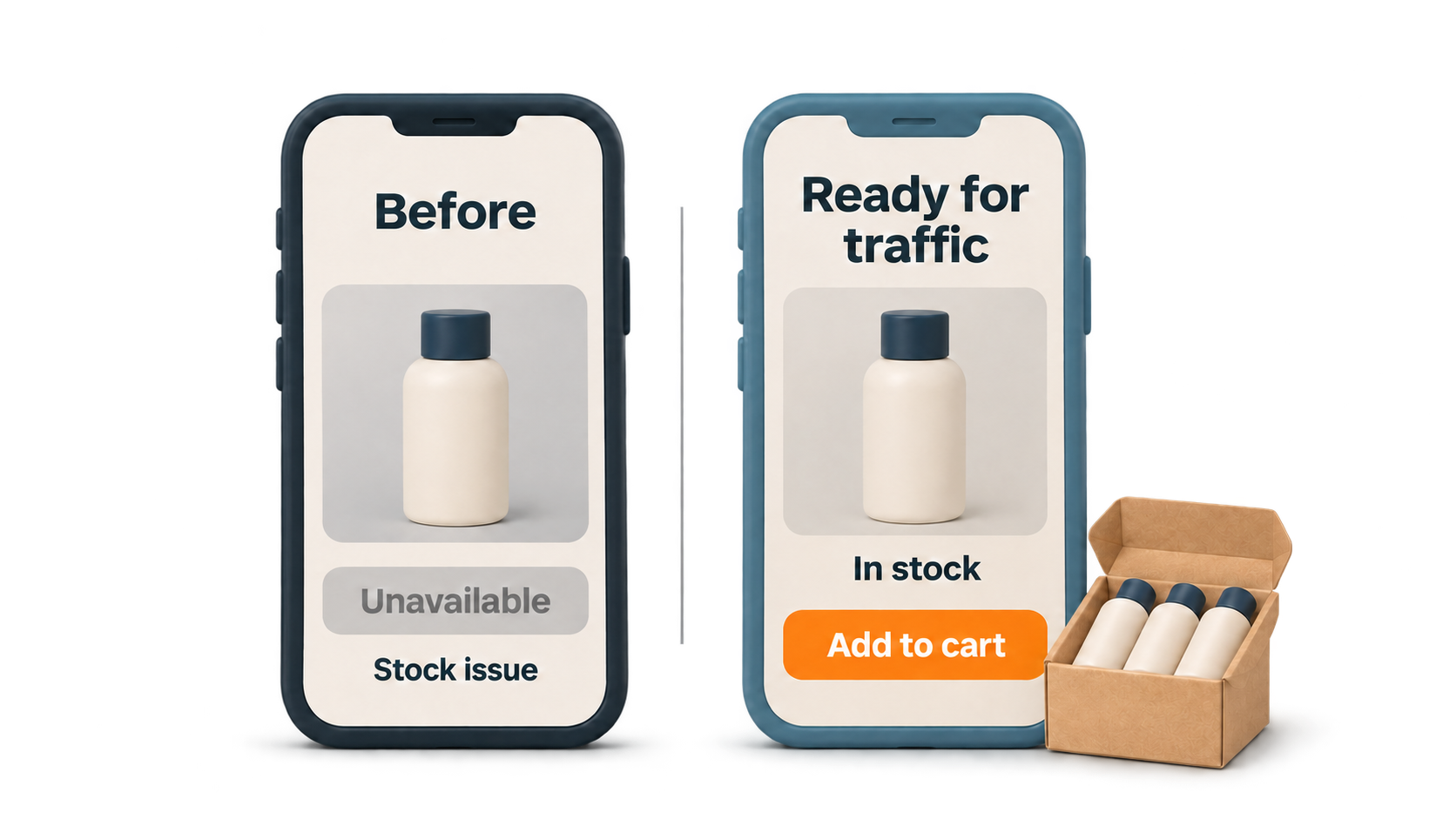
Amazon is a system. Advertising can create demand, but weak product-detail pages, stockouts, unclear promotions, or unworkable margins can stop that demand from becoming profitable revenue. Before increasing budget, a brand needs to know which constraint is actually limiting growth.
Voyageur Group was a 2026 Amazon Ads Partner Awards Challenger Strategy finalist. The team helps brands run Amazon as a connected retail business rather than a standalone ad account.
What does an Amazon advertising agency do?
An Amazon advertising agency should plan, launch, measure, and improve activity across Sponsored Products, Sponsored Brands, Sponsored Display and, when appropriate, Amazon DSP. But campaign management is only part of the job.
A useful partner can also identify whether a performance problem is caused by media, conversion, inventory, pricing, content, or a combination of those factors. That requires advertising decisions to be connected to listing quality, promotions, SKU-level profitability, organic visibility, and stock position.
Voyageur Group’s Amazon services span strategic account management, fulfillment operations, retail media, content, and performance reporting. That structure is designed to keep growth efforts coordinated rather than handing each problem to a different partner.
A warning sign is an agency that recommends increasing spend before reviewing catalog health, margins, stock coverage, and product-detail pages.
Which type of Amazon advertising agency is right for my business?
The right model depends on what your internal team already owns. A capable in-house Amazon team may need focused PPC support. A brand without that operating depth may need a partner that can connect campaigns to the wider retail business.
Types of Amazon Agencies Compared: Which Is Best for Your Brand?
Choosing an Amazon agency starts with knowing the model you're hiring. Below, we compare PPC-only shops, full-service Amazon agencies, holding-company agencies, and software-plus-services providers by who they're best for, their primary strength, and their most common limitation.
| Agency type | Best for | Primary strength | Common limitation |
|---|---|---|---|
| PPC-only shop | Brands with a strong in-house Amazon team | Focused bid, keyword, and campaign management | May not address content, inventory, or retail strategy |
| Full-service agency | Brands that need coordinated Amazon growth | Advertising, account management, content, analytics, and operations in one plan | Requires clear scope and senior-level strategic oversight |
| Holding-company agency | Large brands with broad media needs | Scale, buying power, and multi-channel resources | Amazon work can become one small part of a larger account |
| Software plus services | Teams that want automation with in-house control | Technology, dashboards, and workflow efficiency | Software cannot replace category judgment or retail strategy |
Voyageur Group is built for brands that need Amazon advertising connected to account management, content, and retail media strategy, rather than treated as a silo.
Can an Amazon advertising agency improve sales without wasting more ad spend?
Yes, but only when the agency treats spend as an investment with constraints, not a growth metric on its own.
A scalable plan should assess total sales, conversion rate, return on ad spend, share of shelf, share of voice, repeat-purchase behavior, inventory, and SKU-level profitability together. A campaign with strong ROAS can still be the wrong place to invest if the product is low-margin, repeatedly out of stock, or converting poorly relative to its category.
That is why the first question is often not “How can we spend more?” It is “What needs to be true before more spend is justified?”
A sound testing plan should state:
What will change
Why that change should improve the outcome
Which metric will determine whether it worked
What action the team will take if it does not work
Ask an agency what would cause it to reduce budget on a campaign that appears to have a good ROAS. A strong answer should account for contribution margin, total sales, inventory risk, and whether the campaign is creating incremental demand.
How does an Amazon advertising agency build a strategy that scales?
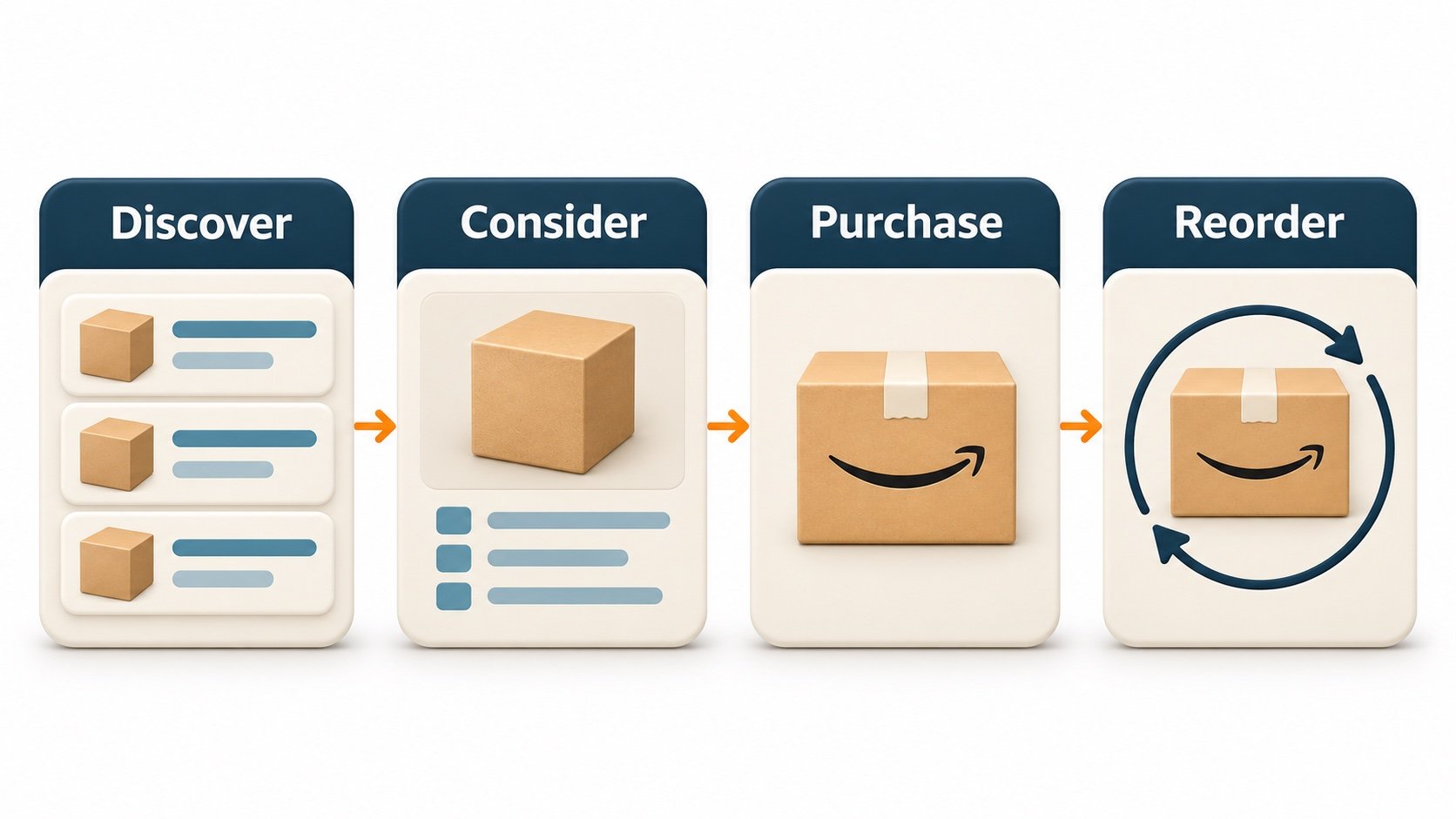
A capable agency begins with a business diagnosis, then builds a practical plan around the category, products, seasonality, competitive landscape, and profit targets. Campaign structure should reflect shopper intent, from high-intent product searches through category discovery and retargeting.
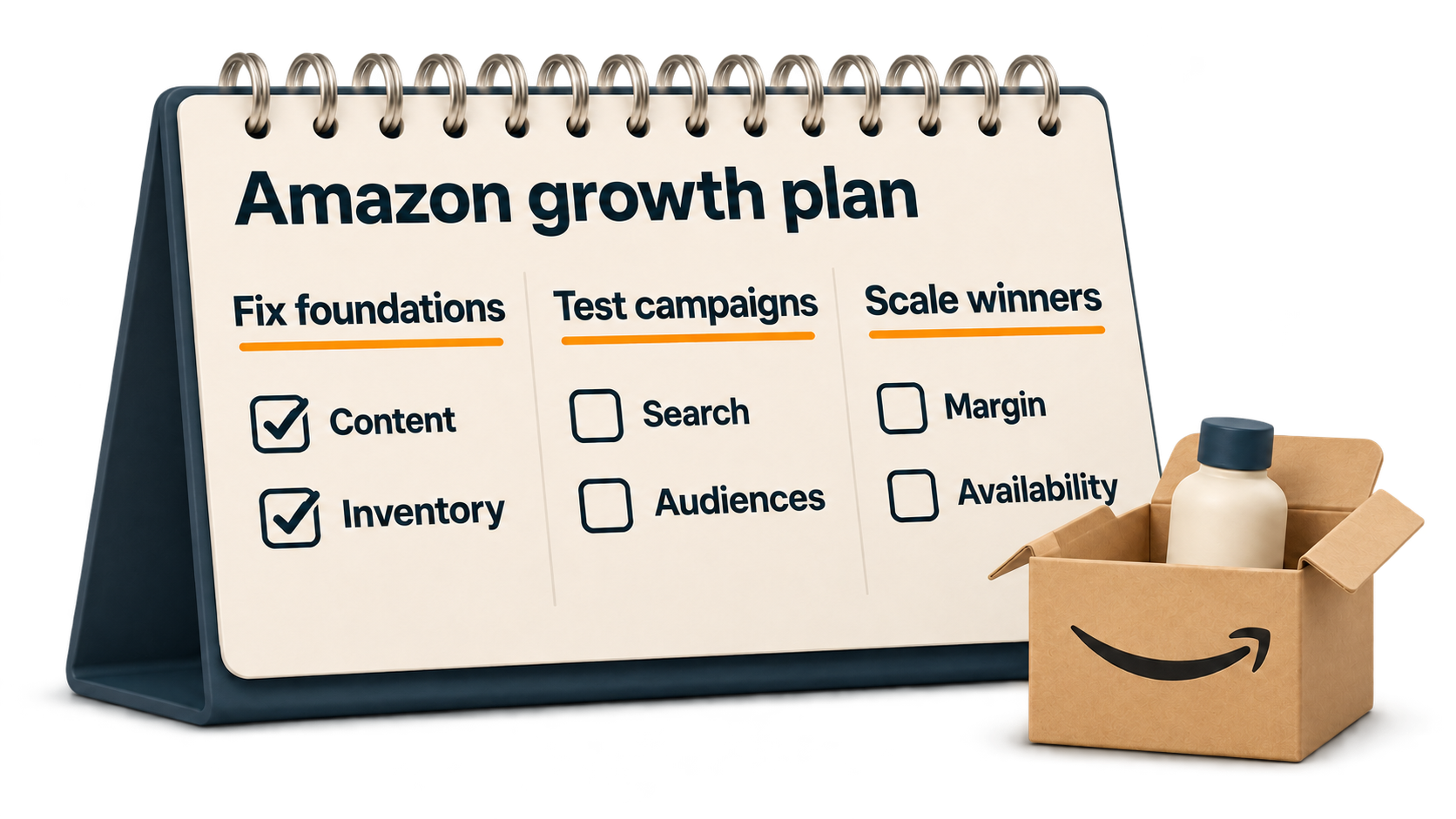
The plan should also sequence work correctly. If a hero SKU has weak content, low conversion, or limited inventory, fixing that constraint may create more value than adding another campaign type. Conversely, a well-converting, well-stocked product may be ready for broader audience development or new-to-brand acquisition.
Amazon Ads recognized Voyageur Group as a 2026 Challenger Strategy finalist for work with Odele Beauty in premium hair care. The finalist profile describes a connected approach using retail purchase signals, Sponsored Brands video, Sponsored Products, Sponsored Display, Amazon DSP, Amazon Marketing Cloud, and retention efforts such as Subscribe & Save and tailored promotions. Read Amazon Ads’ finalist profile
Ask prospective agencies to explain which products, search terms, and audience segments they would prioritize first, and why. The answer should show how product maturity, rating, margin, availability, and category competition affect the recommendation.
How much does an Amazon advertising agency cost?
Published pricing guides place Amazon agency fees broadly between about $1,500 and $25,000+ per month, and for large businesses even more depending on scope, catalog size, marketplaces, ad spend, and operational support. PPC-only management generally sits toward the lower end; complex, multi-marketplace programs sit toward the higher end. One published pricing benchmark reports a similar range.
Treat this as an indicative benchmark, not a universal rate card. The right fee is not the lowest number. It is the fee attached to a clear scope, measurable responsibilities, appropriate senior oversight, and a realistic plan for creating more value than the engagement costs.
A proposal should separate:
Recurring management
Project work
Creative production
Software or data costs
Media spend
The conditions that change scope or price
For percentage-of-spend fees, ask how the agency will avoid an incentive to increase budget when profitability does not support it. The agreement should define budget-approval thresholds, success measures, and the brand’s ownership of accounts and data.
How should an Amazon advertising agency report performance?
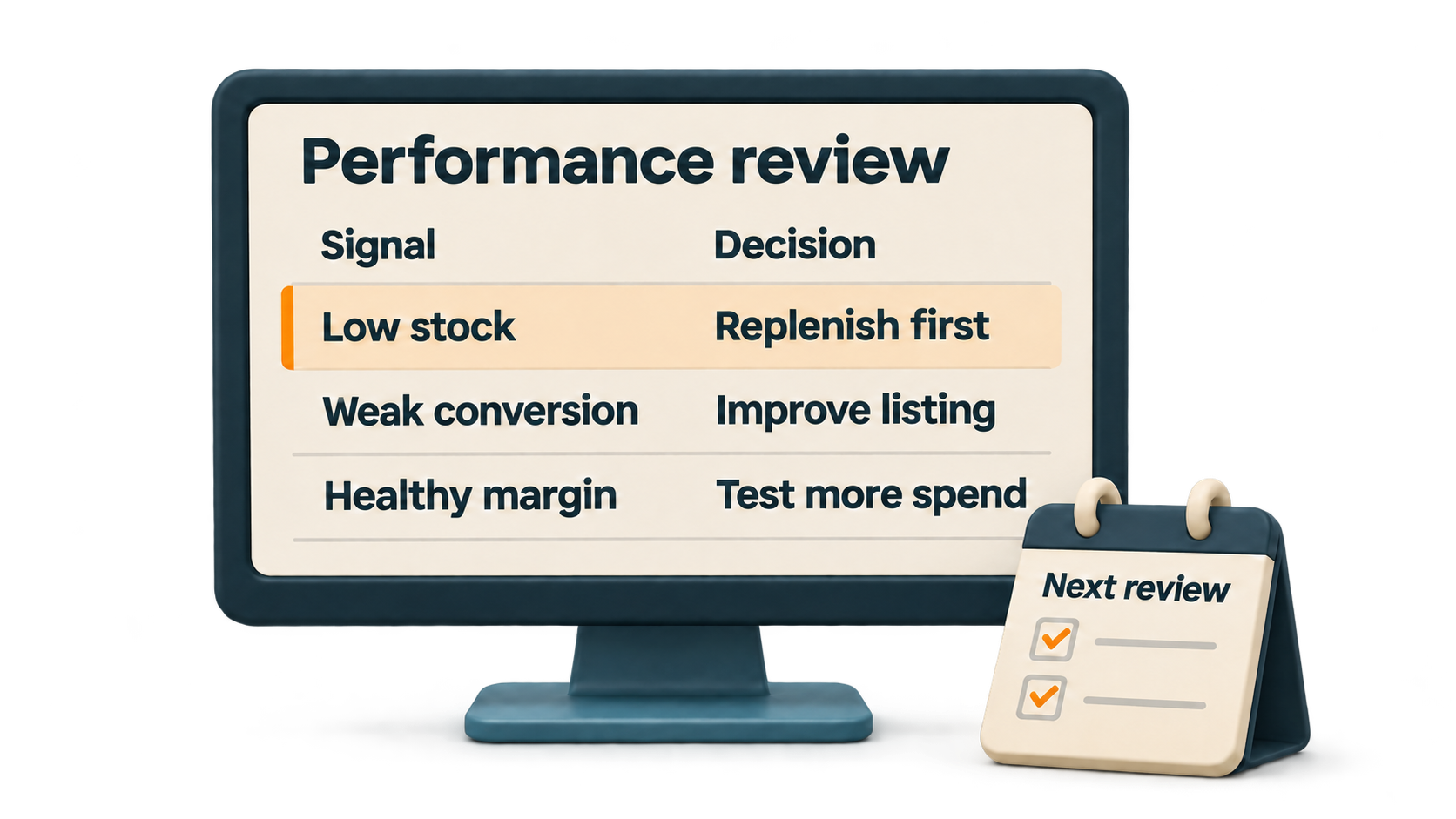
Good reporting makes decisions easier. It should explain what happened, why it happened, what changed, and what the team will do next.
A useful operating view combines advertising metrics with retail outcomes: total sales, conversion, inventory, profitability, SKU performance, share of shelf, and the status of current tests. A dashboard without commentary is not a business review.
Voyageur Group includes unified retail reporting, performance dashboards, KPI tracking, and real-time business visibility in its Amazon offering. Explore Voyageur Group’s Amazon capabilities
Ask to see an example of how an insight became a specific action. The answer should show an actual decision, such as reallocating budget, improving a listing, changing a promotional plan, delaying expansion because of inventory, or protecting margin on a low-profit SKU.
What experience should an Amazon advertising agency have?
Relevant experience matters more than a long logo list. Look for a partner that understands your category, business model, retail constraints, and growth stage.
A new brand building its first Amazon presence needs a different plan from a mature catalog defending category share. Likewise, a product with limited availability should not receive the same acquisition plan as a reliably replenished best seller.
Voyageur Group brings Amazon, Target, Walmart, retail media, and design services together to help consumer brands coordinate marketplace growth across channels. Meet the Voyageur Group team
Ask for comparable examples with context: the starting condition, constraint, actions taken, timeframe, and outcome. Percentage gains without that context are not enough to judge whether an approach applies to your business.
What questions should I ask before signing?
Who will manage our account day to day, and how senior are they?
How do you connect advertising strategy to inventory, content, pricing, and profitability?
What data, account access, and assets will remain owned by our brand?
What will the first 90 days look like?
How will you define success beyond ROAS?
Which decisions require our approval?
How often will we review performance and make strategic decisions?
What happens when results miss expectations?
The right agency will be direct about tradeoffs, priorities, and what it needs from your internal team. It should also be willing to say when the next dollar is better spent on content, operations, or inventory rather than media.
Choose a Partner That Can Scale the Whole Amazon Business
A high-performing Amazon advertising agency should do more than optimize campaigns. It should help your brand make better decisions across media, content, operations, and retail strategy.
Voyageur Group helps brands build that connected approach. For brands ready to make Amazon a true growth channel, the next step is a clear assessment of what is limiting sales today, what must be fixed first, and where incremental investment can create profitable growth.
Voyageur Group is built for brands that need Amazon advertising connected to account management, content, and retail media strategy, rather than treated as a silo.
Can an Amazon advertising agency improve sales without wasting more ad spend?
Yes, but only when the agency treats spend as an investment with constraints, not a growth metric on its own.
A scalable plan should assess total sales, conversion rate, return on ad spend, share of shelf, share of voice, repeat-purchase behavior, inventory, and SKU-level profitability together. A campaign with strong ROAS can still be the wrong place to invest if the product is low-margin, repeatedly out of stock, or converting poorly relative to its category.
That is why the first question is often not “How can we spend more?” It is “What needs to be true before more spend is justified?”
A sound testing plan should state:
What will change
Why that change should improve the outcome
Which metric will determine whether it worked
What action the team will take if it does not work
Ask an agency what would cause it to reduce budget on a campaign that appears to have a good ROAS. A strong answer should account for contribution margin, total sales, inventory risk, and whether the campaign is creating incremental demand.
How does an Amazon advertising agency build a strategy that scales?
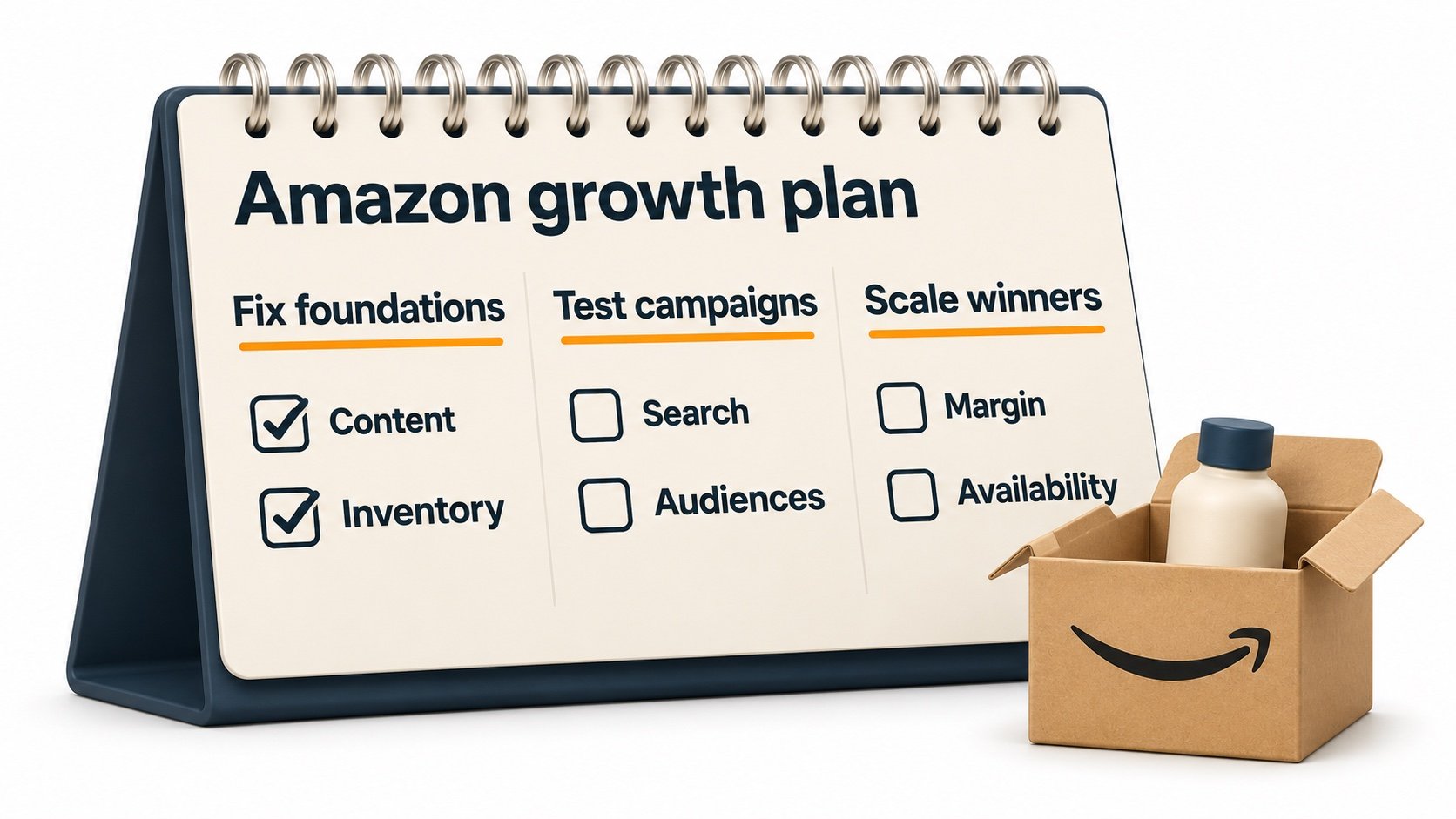
A capable agency begins with a business diagnosis, then builds a practical plan around the category, products, seasonality, competitive landscape, and profit targets. Campaign structure should reflect shopper intent, from high-intent product searches through category discovery and retargeting.
The plan should also sequence work correctly. If a hero SKU has weak content, low conversion, or limited inventory, fixing that constraint may create more value than adding another campaign type. Conversely, a well-converting, well-stocked product may be ready for broader audience development or new-to-brand acquisition.
Amazon Ads recognized Voyageur Group as a 2026 Challenger Strategy finalist for work with Odele Beauty in premium hair care. The finalist profile describes a connected approach using retail purchase signals, Sponsored Brands video, Sponsored Products, Sponsored Display, Amazon DSP, Amazon Marketing Cloud, and retention efforts such as Subscribe & Save and tailored promotions. Read Amazon Ads’ finalist profile
Ask prospective agencies to explain which products, search terms, and audience segments they would prioritize first, and why. The answer should show how product maturity, rating, margin, availability, and category competition affect the recommendation.
How much does an Amazon advertising agency cost?
Published pricing guides place Amazon agency fees broadly between about $1,500 and $25,000+ per month, and for large businesses even more depending on scope, catalog size, marketplaces, ad spend, and operational support. PPC-only management generally sits toward the lower end; complex, multi-marketplace programs sit toward the higher end. One published pricing benchmark reports a similar range.
Treat this as an indicative benchmark, not a universal rate card. The right fee is not the lowest number. It is the fee attached to a clear scope, measurable responsibilities, appropriate senior oversight, and a realistic plan for creating more value than the engagement costs.
A proposal should separate:
Recurring management
Project work
Creative production
Software or data costs
Media spend
The conditions that change scope or price
For percentage-of-spend fees, ask how the agency will avoid an incentive to increase budget when profitability does not support it. The agreement should define budget-approval thresholds, success measures, and the brand’s ownership of accounts and data.
How should an Amazon advertising agency report performance?
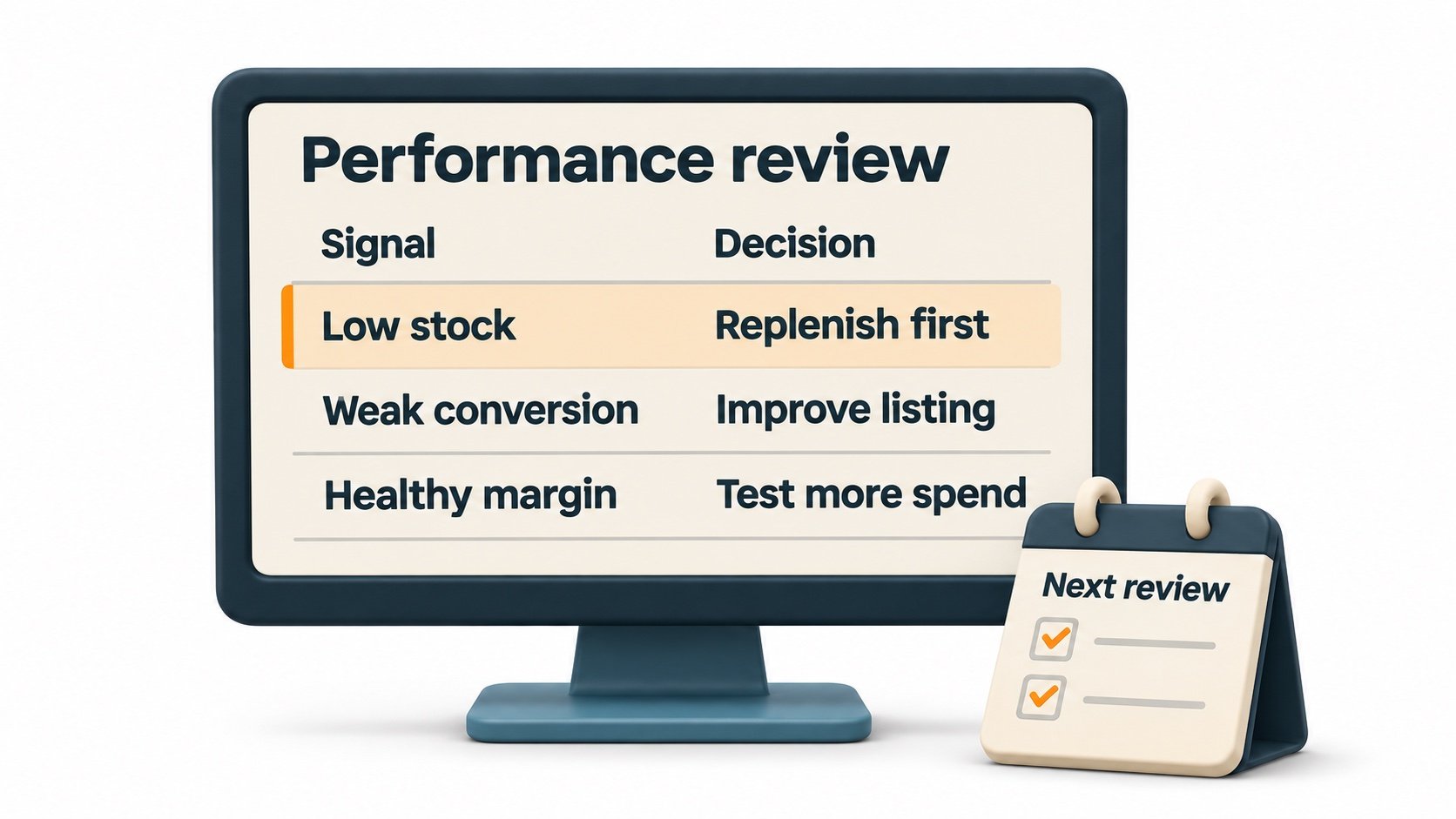
Good reporting makes decisions easier. It should explain what happened, why it happened, what changed, and what the team will do next.
A useful operating view combines advertising metrics with retail outcomes: total sales, conversion, inventory, profitability, SKU performance, share of shelf, and the status of current tests. A dashboard without commentary is not a business review.
Voyageur Group includes unified retail reporting, performance dashboards, KPI tracking, and real-time business visibility in its Amazon offering. Explore Voyageur Group’s Amazon capabilities
Ask to see an example of how an insight became a specific action. The answer should show an actual decision, such as reallocating budget, improving a listing, changing a promotional plan, delaying expansion because of inventory, or protecting margin on a low-profit SKU.
What experience should an Amazon advertising agency have?
Relevant experience matters more than a long logo list. Look for a partner that understands your category, business model, retail constraints, and growth stage.
A new brand building its first Amazon presence needs a different plan from a mature catalog defending category share. Likewise, a product with limited availability should not receive the same acquisition plan as a reliably replenished best seller.
Voyageur Group brings Amazon, Target, Walmart, retail media, and design services together to help consumer brands coordinate marketplace growth across channels. Meet the Voyageur Group team
Ask for comparable examples with context: the starting condition, constraint, actions taken, timeframe, and outcome. Percentage gains without that context are not enough to judge whether an approach applies to your business.
What questions should I ask before signing?
Who will manage our account day to day, and how senior are they?
How do you connect advertising strategy to inventory, content, pricing, and profitability?
What data, account access, and assets will remain owned by our brand?
What will the first 90 days look like?
How will you define success beyond ROAS?
Which decisions require our approval?
How often will we review performance and make strategic decisions?
What happens when results miss expectations?
The right agency will be direct about tradeoffs, priorities, and what it needs from your internal team. It should also be willing to say when the next dollar is better spent on content, operations, or inventory rather than media.
Choose a Partner That Can Scale the Whole Amazon Business
A high-performing Amazon advertising agency should do more than optimize campaigns. It should help your brand make better decisions across media, content, operations, and retail strategy.
Voyageur Group helps brands build that connected approach. For brands ready to make Amazon a true growth channel, the next step is a clear assessment of what is limiting sales today, what must be fixed first, and where incremental investment can create profitable growth.